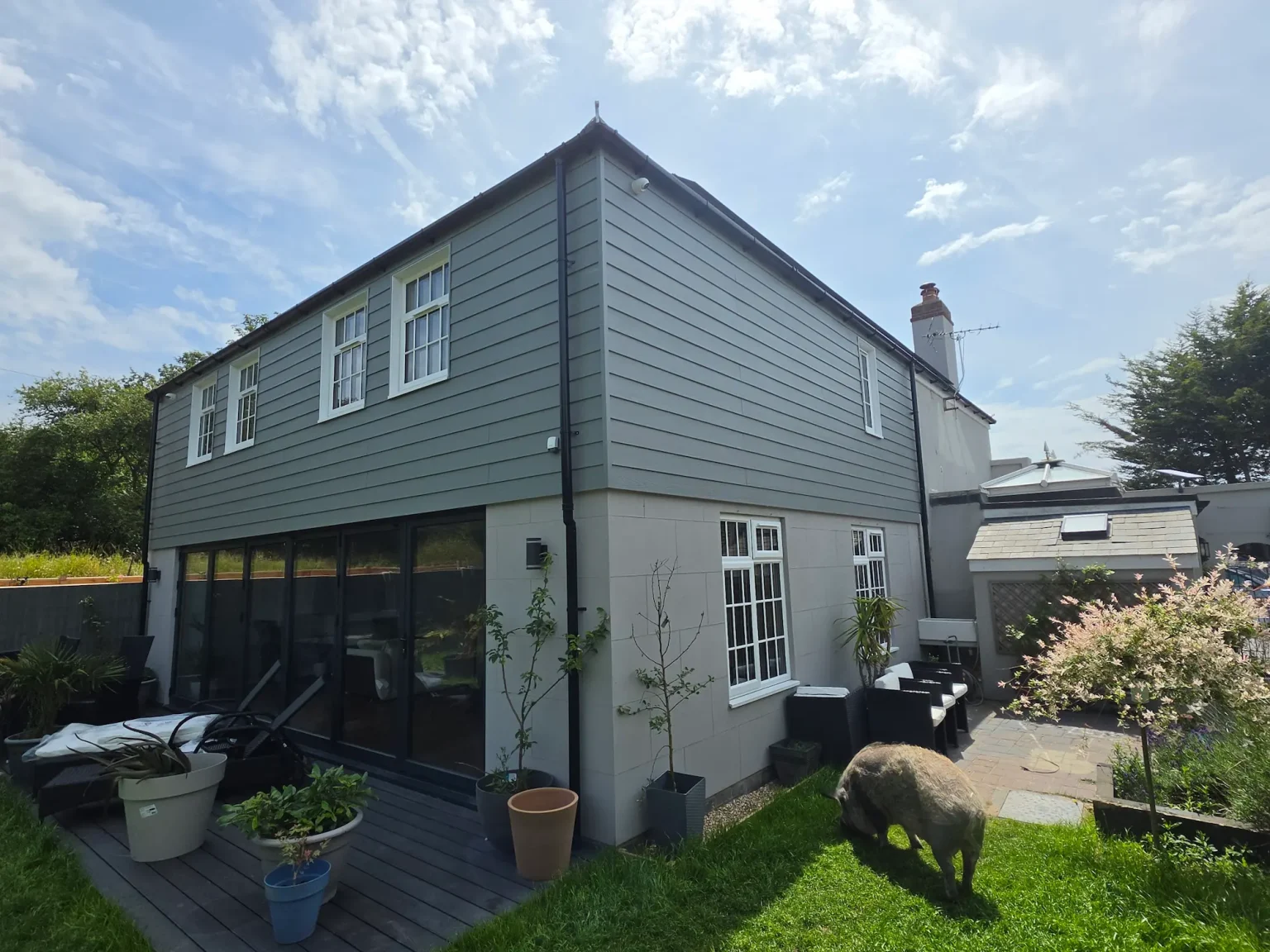
Making Spaces: Creating more homes for the children we care for across West Sussex
Every child deserves a safe, loving and stable place to call home. In West Sussex, more than 1,050 children are currently in our care, and we need more local foster families to help meet their individual needs.
We know that many people have the qualities and experience to become excellent foster carers, but are unable to take the next step because of their housing situation. Meanwhile, we already have amazing carers who would love to be able to support more children, but are limited by space.
That’s why we’re proud to have developed Making Spaces – a project designed to help remove some of the barriers and open up the potential of carers’ existing homes.
What is the Making Spaces project?
The Making Spaces (Fostering) project aims to address the critical shortage of foster carers caused by housing constraints, financial barriers, and systemic challenges in the rental market. Rising costs, restrictive regulations, and misconceptions about fostering have significantly reduced the availability of carers, leading to fewer enquiries and increased pressure on children’s services.
Making Spaces brings together West Sussex County Council teams and external partners to explore practical ways of creating more room for children to live with fostering families or supported lodgings hosts. This includes working with landlords, housing providers and other organisations to develop a greater understanding of fostering, and identify solutions that work for carers, children and homeowners.
The project explores:
- Home adaptations and other ways to create additional bedroom space.
- The innovative Garden Pods project to harness existing outdoor space.
- Working with partners to explore housing options for people who want to foster.
- Developing partnerships to explore changes to the lettings system.
- Resources to help housing providers understand what fostering is and to address misconceptions.
The aim is to make better use of the homes and spaces that already exist, while ensuring adaptations are carefully planned, responsibly sourced and appropriate for each family’s needs.
Why is Making Spaces needed?
Around 21% of children in West Sussex currently live with foster families or Supported Lodgings hosts. More than a quarter live with Independent Fostering Agency carers, sometimes a long way from their home area, while some children and young people are living in residential care and other settings, even though their needs might be best met in a family setting if more homes were available.
Having more local foster families would give us greater choice when matching children with carers. Good matching is vital to help children feel cared for, accepted and understood, and they are more likely to settle and remain with a family for as long as they need to.
We want to recruit people based on the qualities, skills and commitment they can offer – not simply the size or type of property they live in.
We also want to invest in our existing carers. The initial outlay for adaptations is significantly offset by the cost saving of moving a child from residential care to one of our fostering families. This is also often the best option for our children, giving them the family life they deserve.
Read about Foster Carers’ successful home adaptations projects…
Holly & Gary’s Home Adaptation
For Holly and Gary, fostering has always been about giving children the best possible childhood while they are part of their family. Since becoming approved foster carers in 2020, they have welcomed several children into their home. Some have returned to their birth families, some have moved on to adoption and two have become part of Holly and Gary’s forever family.
As their family grew, their three-bedroom home became increasingly crowded. With no spare bedrooms, they found they were realistically only able to care for newborn babies. They wanted to continue fostering and welcome children with a wider range of needs, but the size of their home was limiting what they could offer.
A conversation with a councillor introduced Holly and Gary to West Sussex County Council’s Carer Adaptations Fund. After speaking with their supervising social worker and considering how the funding could help them continue fostering, they put forward their application.
The process involved reflecting on their fostering experience, commitment and involvement in the community, as well as exploring how additional space would benefit children in their care. Holly and Gary worked with an architect to develop plans for an extension and applied for planning permission before their funding was approved.
From first hearing about the fund to completing the work took around two and a half years. The building work brought plenty of excitement for the children, who enjoyed watching the builders, having breakfast in the garden playhouse and even taking a turn in a digger. Although there was noise and disruption, they were fascinated by the transformation taking place around them.
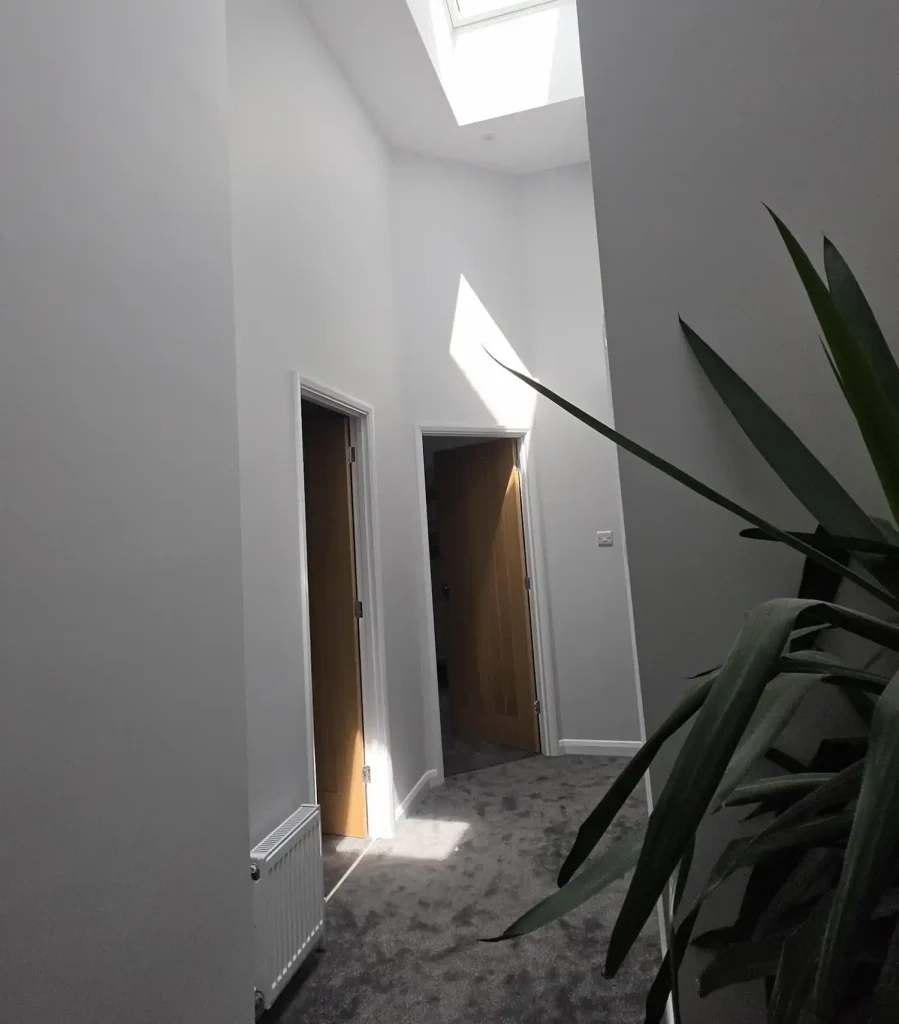
The finished extension has made a huge difference. It includes three new bedrooms, one with an en-suite, a family bathroom and a large downstairs living area. This has been divided into a quiet lounge and a dedicated playroom filled with toys and dressing-up clothes.
The additional space meant Holly and Gary could welcome two more children – children they would not have been able to care for in their previous home. In fact, the new bedrooms were needed before the building work had even finished.
Moving from two children to four has been a busy and sometimes challenging transition, but the whole family has adapted. Holly and Gary describe becoming peacekeepers, therapists, playmates, hairdressers and much more. The children have formed strong relationships with one another, and each now has their own space to retreat to when they need some quiet time.
For Holly and Gary, the Carer Adaptations Fund has helped turn a long-held dream into reality. As they say:
“Since we started fostering, we’ve been deeply in love with helping the children and being part of the community. We feel so thankful and privileged to have been acknowledged and supported in the way we have. Our little dream has now come true, and to be able to bring children home into our space and give them what they deserve feels pretty amazing.”
Their experience shows how practical changes to a home can open up new opportunities for fostering. Through Making Spaces, we are working to help more people overcome housing barriers and create safe, loving homes where children can feel cared for, accepted and able to thrive.
Read more about Gary and Holly’s fostering experience and home transformation
Louise’s Home Adaptation
We have three grown up birth children and one adopted son and we started our fostering journey on my birthday in December 2023 when our first young person arrived – a teenage boy from Sudan. Having lived in Kenya for two years, and with our adopted son being of mixed heritage, we decided to focus on fostering unaccompanied asylum-seeking children – particularly because we felt teenagers would be a better fit with our family.
Originally, we were only approved for one child, as the youngest grown-up son still needed to use his bedroom in the University holidays, so we only had one spare room. But we did manage to take in some children in an emergency, using his room while he was away. This made us realise that we would like to foster more young people, but we weren’t sure how we could do that.
The first young man moved on to semi-independent accommodation successfully and then the second as well, staying in touch as they needed to. In October 2025, our first girl came to stay and we all bonded with her incredibly quickly. In December we took in a girl as an emergency arrangement, who happened to be from the same country, and it felt like our family was complete. We agonised over the fact that we couldn’t keep the second girl long term as my son was returning from abroad and needed to live at home, and our daughter (and new baby) and other son needed somewhere to stay when they came to visit.
Head of Service, Kelly did a presentation about the Garden Pod project. We toyed with the idea of adapting an existing ‘cabin’ in the garden, by adding a bathroom to it but thought that planning and logistics for services to it would be impossible. Then a throwaway comment by Kelly towards the end of her presentation became a lightbulb moment for us as she said, ‘Don’t forget it doesn’t have to be a new bedroom you build, it could be that you reconfigure the way your house works to create a new bedroom elsewhere’.
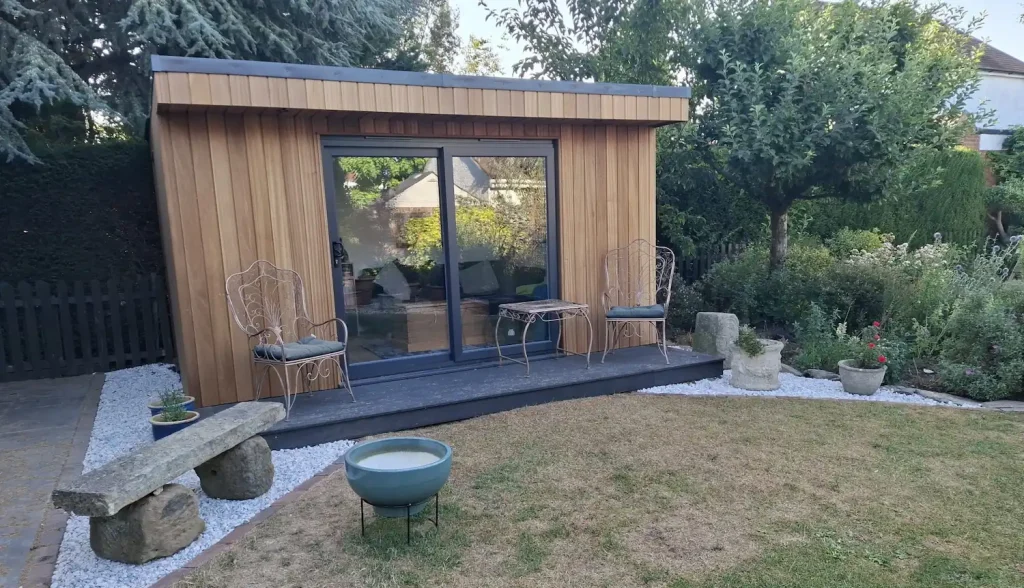
I contacted the team in February and put forward my suggestion that we simply build a garden room that would become the TV room and then the old TV room in the house would become a downstairs guest bedroom. I submitted two detailed quotes and plans and was delighted to be approved. We needed to move fast as my 25-year-old was due to return from his travels in July 2026 so our second fostered girl would need to have a bedroom or would have to move.
Once approved, the only sticking point was with getting the contract and finances in place as we were one of the first carers to get to this stage and we had to call on the help of our lawyer son to get the wording right. The deadline for my window to start the build was approaching (if we missed that window, we wouldn’t be able to accommodate our second girl past July) and it became very stressful to get the contract signed and finances sent through in time to pay the first instalment, but we got there with the Carer Adaptations team pushing from their end and Kelly intervening at one point to make sure the money arrived! We were something of a pilot, so hopefully, our experience means that process is much smoother now for others applying!
The Garden Pod took just three weeks to build and it was great to see my design taking shape. We landscaped around the builders as we wanted it to look lovely as soon as possible. The project was finished with four days to spare before our son came home! It was intense but everyone was very happy.
Our adopted son (the youngest) absolutely loves his new ‘den’ and it has definitely become the boys’ room. Our first girl loves her new bedroom downstairs – it is on the north side of the house so is much cooler and twice the size so she can practice her gymnastics in the room! Our second girl is incredibly happy to be able to stay with her ‘sister’ and ‘mom and dad’. Returning son is very happy to have his bedroom back and the other two, older, children are pleased that the new sofa bed in the den means there is room for them to stay. We are also thrilled that we have now been approved not just to have the two girls permanently but to use our son’s bedroom for emergency and stayover arrangements as and when we can fit them in, so we’ve gone from 1 to possibly being able to care for three young people.
Our girls delight us every day. We thought it might be harder having two (yes there’s more paperwork and more ferrying to appointments, etc) but the companionship the girls provide for each other is invaluable. We are looking forward to offering a bed to a third young person when we can.
Our house is now one full of laughter and support for one another – long may it continue.
Joyce’s Home Adaptation
Our Experience of the Adaptation and Garden Room Funding – Is It Worth Doing? Absolutely!
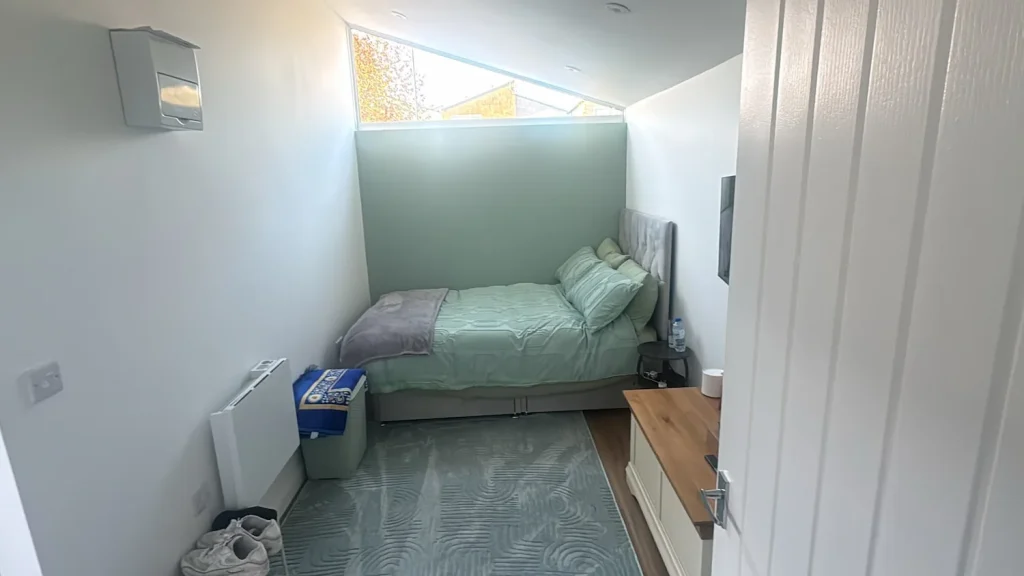
When the adaptation and garden room funding first became available, we decided to apply. I have to say, initially, the application was pretty straightforward. We simply had to explain what difference the funding would make to us and how it would benefit the children in our care. For us, the answer was easy: it would give us some much-needed additional living space and potentially another bedroom.
Unfortunately, our garden wasn’t really suitable for a garden room because we had already built a small conservatory extension to accommodate another foster child.
To explain how we got to that point, we had actually given up our own living room because one of our foster children turned out to be 6ft 7in. Not exactly your average little space-filler! We had to make sure he had somewhere comfortable to sleep, so our living room became our bedroom. That left us with our little conservatory, although, thankfully, we did have a large kitchen which became our main communal area.
However, there was one rather large obstacle standing between us and getting started: the garage!
We had a gargantuan amount of stuff in there. The thought of having to clear it, let alone relocate everything, was probably the biggest adaptation challenge of the whole project. My husband describes himself as a collector. I describe him as a hoarder, although apparently I’m not allowed to say that out loud!
So you can imagine my surprise when he actually announced, “Right, it’s time. Let’s do it.”
He started clearing the garage. I can safely say that nobody was more surprised than me!
Next, we needed our social worker, Khadija (who has been voted as Social Worker of the Year!), to agree that we would be a suitable family for the scheme. I actually think Khadija had more paperwork to complete than we did. Our part was simply to submit a letter of interest.
Then came finding the builders, which, as anyone who has had work done at home will know, can sometimes be a bigger job than you anticipate.
Thankfully, we had previously used a builder who had worked in our home, so we were lucky enough to have someone we already knew and trusted. Our builder submitted an application on our behalf, and we then arranged for an architect.
We needed to do this because we live in a conservation area. I mention that because I wouldn’t want anyone to assume that living in a conservation area automatically means you cannot make changes or adaptations to your home. It doesn’t. You simply need to follow the relevant rules and obtain the necessary permissions. Once we understood what was required, it was all pretty straightforward.
Then came the money side of things.
We did have a little hiccup at the beginning because the builders needed to purchase materials before they could get started, and we needed to arrange for the funding to be released. However, once the ball started rolling, everything became much easier.
I think that’s probably the best way to describe the whole experience. It isn’t necessarily something you can close your eyes and expect to happen overnight, but it is manageable. Sometimes the thought of starting a project is much more daunting than actually doing it.
And if converting your garage isn’t an option, don’t immediately rule yourself out. Have a look at garden buildings, garden rooms or perhaps even consider whether converting your loft might work for you. There may be other ways of creating the space you need.
So, where are we now?
We currently have two foster children who are going to be permanent placements and three young people staying put, making five in total. At the moment, we actually have six, because the room we originally allocated as a recreation room (effectively another front room, as we had already given up our original one) is currently being used by another foster child.
And that brings me to the reason I’m writing this.
It’s not simply to encourage other carers to consider having adaptations done. It’s also about what that additional space can mean for another child who needs a home.
Let’s be realistic, though. Whether we like it or not, it all comes down to the finances.
As part of the agreement, I had to sign a contract committing to remain with the county for at least three years. This wasn’t a concern for me, as I’ve already been fostering with them for over 15 years and have a good working relationship with the team.
The repayment arrangement was explained quite clearly:
- If I left during the first year, I would have to repay 66% of the building costs.
- If I left during the second year, I would have to repay 33%.
- Once I had completed the third year, the funding would be fully paid off and there would be no repayment.
To be honest, this wasn’t something that particularly worried me because I have every intention of continuing to foster for some time yet.
I also had to sign the formal agreement. I did cheat a little here and put it through AI to check whether there was anything I needed to question or clarify. There were one or two small points I wanted confirmed, which was absolutely no problem. They came back to me and made the necessary changes straight away. Once I was happy with everything, my husband and I were more than comfortable signing the contract.
Would I recommend doing it? Absolutely!
Although, if you’d asked me halfway through the building work, I might have given you a slightly different answer. Because honestly, who actually enjoys having builders in their home? LOL!
But look at what you potentially get out of it. You have the opportunity to provide a child with a better living environment and, at the same time, potentially increase the value of your property.
For us, the main motivation was always about helping another child. It’s what we both love doing.
I also think we need to talk more about the importance of retaining foster carers. Retention is so important because experienced carers bring something that cannot simply be taught overnight. We have years of experience, knowledge and understanding, and we need to make sure that carers are supported to continue doing what they do.
So please, don’t automatically rule yourself out of something new within fostering. Keep your eyes open and be prepared to consider opportunities you might not have thought about before.
One thing I’ve definitely learnt over the years is that every time I think, “I’m not sure I could manage that”, I often surprise myself and discover that actually, I can!
I have so many thank-yous to give to everyone who helped us through the paperwork, applications and funding. The whole team made what initially looked like a rather enormous project feel very achievable.
Sometimes, before you even start something, you convince yourself it’s all too much. You look at the paperwork, the building work, the disruption and the money, and think, “No, not for me!”
But sometimes you just need to take that first step.
And as they say, the longest journey begins with the first step.
So, good luck. Take that step. You might surprise yourself too!
Read more from Joyce’s fostering story
Feeling inspired to find out more about fostering with West Sussex County Council?
If you would like to chat to a member of the fostering team, contact Fostering West Sussex today.